
AI tools for small real estate teams became something my brother-in-law’s three-person brokerage actually needed after they lost a listing appointment because nobody had followed up on a lead for eleven days. Not because anyone was lazy — because three agents were each assuming someone else had it covered, and none of them actually did.
That’s the specific problem small real estate teams run into that solo agents and huge brokerages don’t face the same way. A solo agent has no one to accidentally drop a ball to. A big brokerage has dedicated ops staff and expensive enterprise software. A three-to-six-person team sits in an awkward middle where things fall through cracks nobody’s officially responsible for.
He asked me to help figure out what AI tools for small real estate teams actually made sense for a group their size, rather than tools built either for solo agents or for fifty-person offices. That distinction turned out to matter more than I expected going in, and it’s really the entire reason this specific category of AI tools for small real estate teams exists.
This isn’t a generic listicle pulled from a software directory. It’s what we actually looked into together, including the tool that looked great on paper but didn’t fit their team, and the ones that genuinely solved the lead follow-up problem that started this whole search.
Why Small Teams Need a Different Approach Than Solo Agents or Big Brokerages
Most real estate software gets built for one of two audiences: solo agents managing their own pipeline, or large brokerages with dedicated transaction coordinators and marketing staff. A small team of three to six agents doesn’t fit cleanly into either category.
AI tools for small real estate teams need to solve a specific problem — shared visibility into leads and follow-ups without needing a dedicated ops person to manage the system. If a tool assumes one person owns everything, it doesn’t work for a team. If it assumes an entire department, it’s overkill and overpriced for a small group.
The lead follow-up failure that started this search is exactly the kind of problem shared visibility solves. Nobody could see that a lead was going unaddressed, because nothing forced that gap to be visible to the whole team, not just whichever individual agent happened to originally take the lead. That gap is really the whole reason AI tools for small real estate teams exist as a distinct category in the first place.

What Actually Matters for a Small Team’s AI Toolkit
Before getting into specific tools, it’s worth being clear about what a small real estate team genuinely needs, since it’s a different checklist than either solo agent tools or enterprise brokerage software.
Shared lead visibility, so every team member can see where a lead actually stands, not just the agent who originally took the call. This is the single thing that would have caught the eleven-day gap before it became a lost listing, and it’s the foundation every other feature among AI tools for small real estate teams builds on.
Automated follow-up reminders that don’t depend on one person remembering to check a spreadsheet, since the whole point of good AI tools for small real estate teams is catching what humans forget in the exact way that caused the original eleven-day gap.
Reasonable pricing per seat, since a five-person team paying per-agent enterprise pricing adds up fast in a way solo agent pricing tiers don’t reflect — a real factor to weigh when comparing AI tools for small real estate teams against solo-focused alternatives.
Genuine ease of adoption, because a small team doesn’t have time for a lengthy onboarding process, and any of the AI tools for small real estate teams covered here that nobody actually uses consistently might as well not exist.
The Tools Worth Actually Considering
These are the specific AI tools for small real estate teams that came up repeatedly while researching this with my brother-in-law’s team.
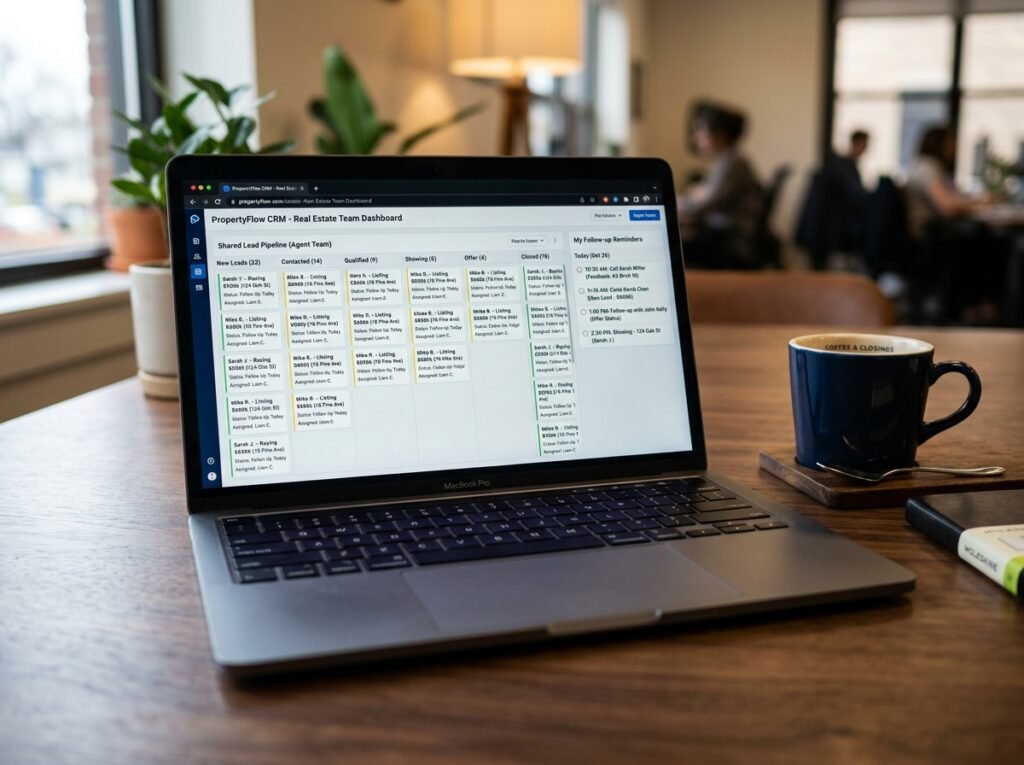
1. Follow Up Boss
Follow Up Boss is built specifically around team-based lead management, with shared pipelines so every agent can see a lead’s full history instead of information living only in one person’s head or inbox. For a small team specifically, this shared visibility is genuinely the core value.
The AI-assisted lead scoring helps prioritize which leads actually need attention first, which matters more for a small team without the bandwidth to manually triage every single lead the way a large team with dedicated ISAs might — a distinction that matters a lot when comparing AI tools for small real estate teams against enterprise-scale platforms.
2. Structurely
Structurely uses AI to handle initial lead response and qualification through automated conversation, which genuinely helps a small team that can’t staff someone to respond to every inbound lead within minutes the way larger operations can.
This became one of the more directly relevant AI tools for small real estate teams we looked at, since the eleven-day follow-up gap was exactly the kind of failure automated initial response is designed to prevent, and it’s genuinely one of the more affordable AI tools for small real estate teams on this list.
3. BoomTown
BoomTown combines lead generation with AI-assisted routing and follow-up sequences, positioning itself for teams that want both new lead flow and better management of leads already in the pipeline. It’s a more full-featured platform than some smaller teams need, which is worth weighing honestly before committing.
The tradeoff is cost and complexity — BoomTown is genuinely built with larger teams in mind, so a very small team should test carefully whether the full feature set actually gets used or just adds overhead compared to lighter AI tools for small real estate teams.
4. Notion for Real Estate Agents (Team Workspace)
For teams wanting more control over their specific workflow rather than a fixed real estate CRM structure, a shared Notion workspace can serve a similar purpose at a fraction of the cost, with the tradeoff being more manual setup work upfront. I’ve covered the individual-agent version of this setup in more detail in my guide to Notion for real estate agents, and the same core structure extends to a small team by simply sharing the workspace across agents instead of keeping it individual.
This won’t have the AI-assisted lead scoring or automated response features of dedicated real estate software, but for a team specifically trying to solve the visibility problem on a tight budget, it’s a genuinely reasonable starting point.
Step-by-Step: How to Actually Roll This Out to a Small Team
Here’s the actual sequence that worked for my brother-in-law’s team rolling out AI tools for small real estate teams for the first time.
Step 1: Identify the Specific Failure Point First
Before choosing a tool, get specific about what actually went wrong. For my brother-in-law’s team, it was follow-up visibility. For another team, it might be lead response speed or transaction coordination. Different AI tools for small real estate teams solve different specific problems, so knowing yours first genuinely matters more than picking a tool off a generic list.
Step 2: Get Buy-In From Every Agent Before Rolling Out
A shared system only works if everyone actually uses it. Get every agent’s agreement on the new process before rolling out any tool, since a system half the team ignores just creates a false sense of coverage that’s arguably worse than no system at all. This step alone determines whether AI tools for small real estate teams actually succeed or quietly get abandoned within a month.
Step 3: Start With One Core Workflow, Not Everything at Once
Roll out shared lead visibility and follow-up tracking first, before adding transaction coordination or marketing automation features. Getting the core problem solved and adopted matters more than launching every AI tools for small real estate teams feature turned on at once.
Step 4: Set a Weekly Team Review
Once a week, review the shared pipeline as a team, not just individually. This is what actually catches gaps before they become an eleven-day problem, since a system nobody looks at together quietly stops functioning as a team tool no matter how good the underlying AI tools for small real estate teams actually are.
Step 5: Revisit After 60 Days
After two months of real use, honestly assess what’s working and what isn’t. Team needs shift as they grow, and what solved the initial problem might need adjusting once the team’s actual usage patterns of their AI tools for small real estate teams become clear.
Real Example: How My Brother-in-Law’s Team Actually Uses This Now
This is genuinely how their AI tools for small real estate teams setup plays out week to week now, not a cleaned-up hypothetical.

After testing a couple options, his team settled on Follow Up Boss for shared lead visibility, specifically because the team-based pipeline view meant any agent could see if a lead had gone quiet, regardless of who originally took it.
The weekly team review turned out to matter just as much as the software itself. Fifteen minutes every Monday looking at the shared pipeline together catches exactly the kind of gap that caused the original lost listing, since it’s now genuinely visible to the whole team, not buried in one person’s individual task list.
A different small team he knows went with Structurely instead, specifically because their bigger issue was initial response speed on new leads rather than follow-up visibility on existing ones. Different AI tools for small real estate teams solve different actual bottlenecks, which is really the core lesson from watching both teams pick AI tools for small real estate teams independently and land on completely different answers.
Common Mistakes People Make With This
These are mistakes we specifically watched for while helping his team pick AI tools for small real estate teams, some already made once before we got involved.
Mistake 1: Choosing enterprise software sized for a much bigger team. A lot of real estate AI tools are priced and built assuming twenty-plus agents. Make sure whatever you choose from the available AI tools for small real estate teams genuinely fits a team your actual size, not a scaled-down enterprise plan.
Mistake 2: Rolling out without full team buy-in first. If even one agent doesn’t actually use the shared system, visibility gaps reopen immediately, and the whole point of the tool quietly stops working for the team.
Mistake 3: Adding every available feature immediately. Start with the one workflow solving your actual specific problem. Adding transaction coordination, marketing automation, and lead scoring all at once overwhelms a small team before any of it becomes habit.
Mistake 4: Skipping the weekly team review. The software alone doesn’t catch gaps — a genuine habit of looking at shared data together does. Without that habit, even the best AI tools for small real estate teams quietly become individual tools again, exactly the failure mode that started this whole search.
Mistake 5: Never reassessing as the team grows. What works for three agents might need adjusting at six. Revisit your setup periodically rather than assuming the first AI tools for small real estate teams you chose will scale indefinitely without changes.
Comparing This to Solo Agent Tools
Tools built for solo agents, which I’ve covered separately in my guide to Notion for real estate agents, genuinely work well for an individual managing their own pipeline. The moment a second or third agent joins and needs shared visibility into the same leads, though, a solo-focused tool starts showing real limitations that AI tools for small real estate teams are specifically built to solve.
AI tools for small real estate teams specifically address that shared-visibility gap, which is the entire reason my brother-in-law’s original problem happened in the first place — a solo agent tool with no real team layer, being used by three people who each assumed someone else had coverage. The National Association of Realtors’ technology resources are worth a look if you want broader data on how teams of different sizes are actually adopting these tools industry-wide, rather than relying on any one team’s experience alone.
How This Fits Into a Broader Team Workflow
Lead management doesn’t need to exist separately from the rest of how a small team runs its business. The same relationship-tracking thinking I’ve covered in my guide to using Notion as a CRM for freelancers applies conceptually to AI tools for small real estate teams too, even though real estate teams need the specific shared-visibility layer that a single freelancer’s CRM setup doesn’t require.
And if scheduling coordination is also a pain point for your team, the same “match the tool to your actual team size” lesson from my guide to AI scheduling assistants for solo founders applies just as well to choosing AI tools for small real estate teams — the right tool depends entirely on your team’s actual size and workflow, not which software has the longest feature list.
Final Thoughts
AI tools for small real estate teams solve a genuinely specific problem that neither solo agent software nor enterprise brokerage platforms are built to address — shared visibility for a small group, without the overhead or cost of tools sized for a much bigger operation.
Start by identifying your team’s actual failure point, get full buy-in before rolling anything out, and build in a genuine weekly habit of reviewing shared data together. That habit matters as much as whichever specific AI tools for small real estate teams you actually choose.
That’s really the whole shift — not more software for its own sake, but making sure a lead, once it belongs to your team, never again quietly becomes nobody’s responsibility the way that eleven-day gap did before anyone even realized it had happened.