

AI scheduling assistants for solo founders became something I actually needed the week I double-booked two investor calls at the exact same time, because I was manually juggling my calendar between three different time zones and just lost track. One call ended fifteen minutes late, the other person waited around confused, and I spent the next morning writing an apology email instead of actually working on my product.
That mix-up wasn’t really about being disorganized. It was about doing something manually that genuinely shouldn’t be manual once you’re the only person running scheduling for your entire company. Founders wear every hat, and calendar management is exactly the kind of hat that quietly eats hours you don’t have.
A fellow founder I know mentioned she’d started using an AI scheduling assistant that handled the actual back-and-forth of finding meeting times, and stopped losing chunks of her day to email threads that went “does Tuesday work? how about Wednesday? actually Thursday’s better.” That’s what got me testing AI scheduling assistants for solo founders seriously, instead of just continuing to wing it with a regular calendar app.
This isn’t a generic productivity roundup. It’s what actually happened once I stopped manually scheduling everything myself and started genuinely relying on AI scheduling assistants for solo founders, including the tool that didn’t work out and the one that actually stuck.
Why Solo Founders Specifically Need This, Not Just Any Calendar App
A regular calendar app shows you what’s already scheduled. It doesn’t actually solve the problem of finding a time that works for two or more people without a back-and-forth email chain. For a solo founder juggling investors, customers, contractors, and your own actual work, that back-and-forth adds up to real lost time every single week.
AI scheduling assistants for solo founders solve a genuinely different problem than a plain calendar — they handle the negotiation part, proposing times based on your actual availability and adjusting automatically when someone can’t make a proposed slot, without you personally typing out five emails to land on one meeting time.
The other reason this matters specifically for solo founders is that you don’t have an assistant or an ops person to offload this to. A dedicated employee handling scheduling makes sense at a certain company size. Before that, AI scheduling assistants for solo founders are genuinely the closest thing to having that person without the payroll cost.
What to Actually Look for in a Scheduling Assistant
Before getting into specific tools, it’s worth being clear about what actually matters for a solo founder’s specific situation, since it’s a different checklist than what a large team needs.
Genuine calendar negotiation, not just a booking link. A booking link is fine for simple cases, but real negotiation — where the tool proposes times, tracks replies, and adjusts automatically — saves far more time for the messier back-and-forth meetings that make up a lot of founder scheduling, which is the core value proposition behind real AI scheduling assistants for solo founders.
Time zone handling that actually works, since a huge amount of founder scheduling involves people in different time zones, and manually converting times is exactly the kind of error-prone task that caused my own double-booking mistake — a problem the best AI scheduling assistants for solo founders are specifically built to eliminate.
Integration with your existing calendar and email, so you’re not manually copying information between systems, which defeats the entire purpose of automating this in the first place.
Reasonable pricing for a solo operation, since a lot of scheduling tools are priced assuming a team of five or more people using it, not a single founder trying to keep overhead low — a real factor to weigh when comparing AI scheduling assistants for solo founders against team-oriented alternatives.
The Tools Worth Actually Considering
These are the specific AI scheduling assistants for solo founders that came up repeatedly in my own research and testing.
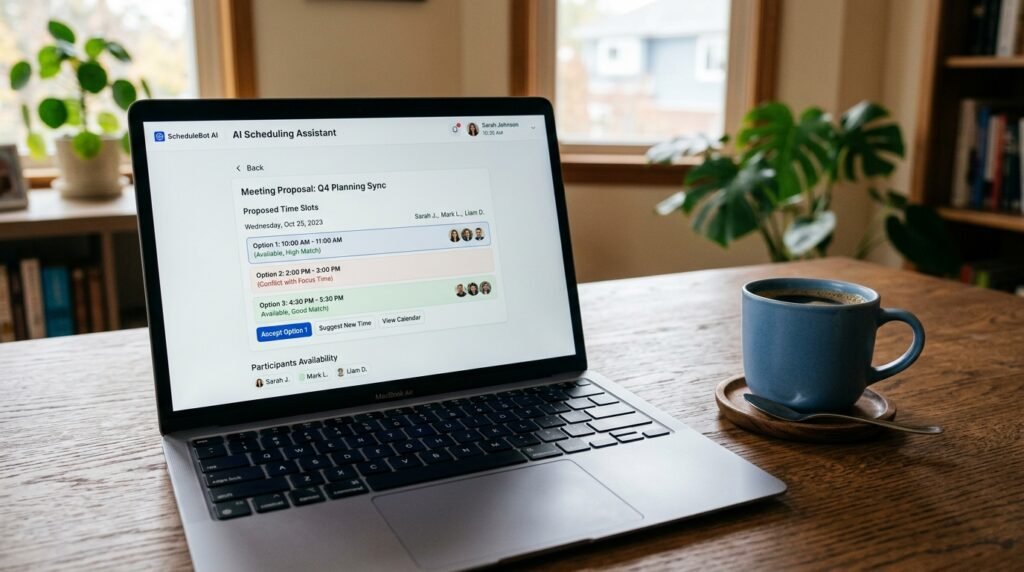
1. Reclaim.ai
Reclaim auto-schedules recurring tasks and habits around your existing meetings, defending focus time automatically and rearranging itself when your calendar shifts. For a solo founder, this matters because it’s not just meeting scheduling — it protects the actual working time you need between all those meetings, which is one of the more underrated jobs among AI scheduling assistants for solo founders.
I found Reclaim genuinely useful for the parts of my week that weren’t meetings at all, since it kept blocking real work time instead of letting my calendar fill up entirely with calls, which is a trap a lot of founders fall into without realizing it.
2. Motion
Motion combines task management with auto-scheduling, taking your to-do list and deadlines and building them directly into your calendar, adjusting automatically when something runs long or shifts. Among AI scheduling assistants for solo founders, Motion leans more toward the “manage my whole day” end of the spectrum rather than just meeting coordination, which makes it a genuinely different pick from the others on this list.
The tradeoff is that Motion is built around a fairly opinionated way of working, and it took me a couple weeks to actually trust its automatic rescheduling instead of second-guessing it constantly.
3. Calendly with AI Features
Calendly’s newer AI-assisted features go beyond a basic booking link, now handling some negotiation and smart availability suggestions rather than just a static list of open slots. For founders who mainly need external people — investors, customers, partners — to book time easily, Calendly remains one of the genuinely simple AI scheduling assistants for solo founders to set up and use.
I still use Calendly specifically for external-facing scheduling, since it’s the tool most people already recognize and trust when they receive a booking link, which matters more than it sounds for first impressions with investors or new customers.
4. Clockwise
Clockwise focuses heavily on protecting focus time by intelligently moving flexible meetings around to create longer uninterrupted blocks, which matters a lot for a solo founder who needs real deep work time, not just back-to-back calls all day. It’s a solid pick among AI scheduling assistants for solo founders specifically dealing with calendar fragmentation.
This one is more team-oriented in its full feature set, but the individual scheduling optimization still holds real value even as a single user, particularly if your calendar tends to get fragmented into small, unproductive gaps between meetings.
Step-by-Step: How to Actually Set This Up
Here’s the actual sequence that got my own AI scheduling assistants for solo founders setup working reliably, after that embarrassing double-booking incident.
Step 1: Audit Your Current Scheduling Pain Points
Before picking a tool, spend a week actually noting where scheduling friction happens — is it external meeting coordination, internal focus time protection, or time zone confusion? Different AI scheduling assistants for solo founders solve different specific problems, so knowing yours first matters.
Step 2: Connect Your Primary Calendar First
Whichever tool you choose, connect your main calendar before adding any secondary ones. Getting the core sync right first prevents the kind of double-booking confusion that started this whole search for me in the first place, and it’s genuinely the foundation every other AI scheduling assistants for solo founders feature depends on.
Step 3: Set Your Actual Availability Honestly
Don’t set generous availability hours you don’t actually want to be in meetings during. Be honest about when you genuinely want calls scheduled, since the entire value of AI scheduling assistants for solo founders depends on it working from real constraints, not aspirational ones.
Step 4: Test With Low-Stakes Meetings First
Before trusting AI scheduling assistants for solo founders with an investor call, test them with lower-stakes meetings — a casual chat with another founder, a vendor call — to make sure the tool behaves the way you expect before anything important is on the line.
Step 5: Review and Adjust After Two Weeks
After two weeks of real use, review what’s actually working and what isn’t. Adjust your availability settings, buffer times, or even switch tools if the first AI scheduling assistants for solo founders you tried isn’t matching how you actually work.
Real Example: How My Own Scheduling Actually Changed
This is genuinely how my own AI scheduling assistants for solo founders setup plays out week to week now, not a cleaned-up hypothetical.
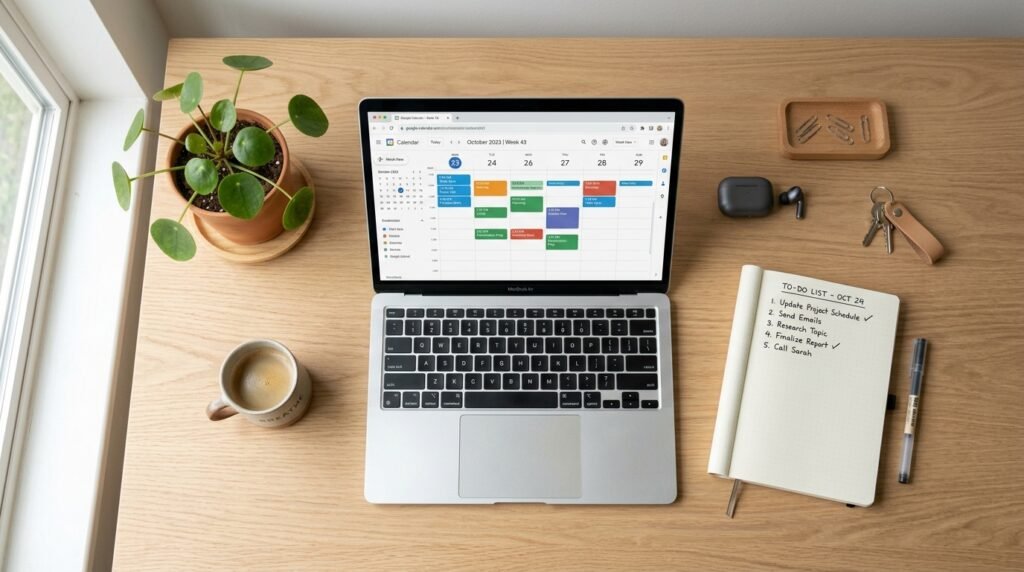
After switching to Reclaim for internal task and focus-time management, plus keeping Calendly for external meeting booking, my calendar stopped being the chaotic mess it was during that double-booking incident. Investor calls now get proposed times automatically based on real availability, not my own error-prone mental math across time zones.
A founder friend running a two-person startup went a different direction, using Motion exclusively since her work involves less external scheduling and more internal task-and-deadline juggling that needed automatic recalculation throughout the day. Different AI scheduling assistants for solo founders fit different actual workflows, which is really the core lesson here, and it’s worth remembering before assuming there’s a single universally correct choice among AI scheduling assistants for solo founders.
Neither of us uses the exact same setup, and neither of us needed to — the point wasn’t finding the single best tool, it was finding the tool that matched our specific bottleneck.
Common Mistakes People Make With This
These are mistakes I made myself while testing different AI scheduling assistants for solo founders, or watched other founders make with their own setups.
Mistake 1: Picking a tool built for teams instead of solo use. A lot of scheduling software is priced and designed assuming multiple people coordinating together. Make sure whatever you choose actually serves a single founder’s workflow, not just a scaled-down team plan.
Mistake 2: Setting unrealistic availability windows. If you mark yourself available for meetings during hours you actually need for deep work, the AI scheduling assistant will happily fill that time, and you’ll end up right back where you started.
Mistake 3: Not testing with low-stakes meetings first. Trusting a new scheduling tool with your most important call before you’ve verified it behaves correctly is a genuinely risky way to find out about a bug or misconfiguration.
Mistake 4: Ignoring time zone settings during setup. This is exactly the mistake that caused my own double-booking. Double-check time zone configuration carefully before relying on any AI scheduling assistants for solo founders for cross-time-zone meetings, since this single setting is responsible for most of the real-world scheduling failures I’ve heard about from other founders.
Mistake 5: Never revisiting settings after the initial setup. Your actual availability and priorities change as your business grows. What made sense when you set up your AI scheduling assistants for solo founders three months ago might not match how you’re actually working now.
Comparing This to Manual Scheduling
Manually scheduling everything yourself genuinely works fine when you’ve got very few meetings and everyone’s in the same time zone. If that describes your current situation, you might not need dedicated AI scheduling assistants for solo founders yet at all.
Once meeting volume grows or time zones start getting involved, AI scheduling assistants for solo founders start paying for themselves quickly in saved time and avoided mistakes. Reclaim’s own comparison of scheduling approaches is worth a look if you want more detail on how automated scheduling stacks up against manual calendar management for a growing solo operation.
How This Fits Into a Broader Founder Workflow
Scheduling doesn’t need to exist separately from the rest of how you run a solo operation. The same client and relationship tracking thinking I’ve covered in my guide to using Notion as a CRM for freelancers applies well to founders relying on AI scheduling assistants for solo founders to manage investor and customer relationships too, even outside a strictly freelance context.
And if you’ve read my comparison of Motion vs Sunsama, the same underlying lesson applies here — premium AI scheduling tools are worth paying for once you’ve actually confirmed a free or manual approach genuinely isn’t cutting it anymore for your specific workload.
Final Thoughts
AI scheduling assistants for solo founders aren’t about looking impressively automated — they’re about not losing real hours every week to calendar back-and-forth that a tool can genuinely handle better than manual email threads ever could.
Start by figuring out your actual scheduling bottleneck, test a tool with low-stakes meetings first, and be honest about your real availability rather than an aspirational version of it. Revisit your AI scheduling assistants for solo founders setup every few months as your business actually grows and changes.
That’s really the whole shift — not eliminating your calendar chaos through some flashy feature, but finally handing off the one task that never should have been manual once you were running an entire company by yourself. If you’ve ever double-booked a call the way I did, that’s exactly the mistake AI scheduling assistants for solo founders exist to prevent.