
Best invoicing apps for freelancers became something I actually needed to research the month I realized I’d sent three different clients invoices with three different formats, two different payment terms, and one invoice that genuinely had the wrong year on it. I was using a Word template I’d copy-pasted and edited by hand every single time, and the cracks were finally showing.
That wrong-year invoice was the actual wake-up call. A client politely pointed out that my invoice said the previous year, which meant I’d been reusing an old file without noticing, and it made me look a lot less put-together than I actually was with the work itself.

That’s what got me testing best invoicing apps for freelancers properly instead of continuing to duct-tape together a system that technically worked until it very visibly didn’t. I wanted something that looked professional by default, tracked what had actually been paid, and didn’t require me to remember which template had this year’s date.
This isn’t a sponsored roundup of whichever invoicing tool has the best affiliate program. It’s what I actually tested against real client invoices, including the one that looked great on paper but didn’t fit how I actually get paid.
Why a Dedicated Invoicing App Actually Matters
A Word document or a spreadsheet template feels like it’s working right up until it isn’t. The wrong-year invoice is exactly the kind of mistake that happens specifically because nothing is checking your work — you’re manually updating a template and trusting your own attention to catch every field.
The best invoicing apps for freelancers solve a specific problem that a manual template can’t: they auto-populate dates, invoice numbers, and client details correctly every time, which removes the exact category of error that made me look unprofessional to a client over something that had nothing to do with my actual work quality.
The other real benefit is payment tracking. A manual system means you’re mentally keeping tabs on who’s paid and who hasn’t, which gets genuinely unreliable once you’re juggling more than a handful of active clients at once — exactly the gap the best invoicing apps for freelancers are built to close.
What Actually Matters When Choosing One
Before getting into specific apps, it’s worth being clear about what genuinely matters for a freelancer’s actual invoicing needs, since it’s different from what a larger business might prioritize.
Payment tracking that’s actually visible, so you can see at a glance who’s paid, who’s overdue, and who you need to follow up with, without cross-referencing a separate spreadsheet — one of the clearest differentiators among the best invoicing apps for freelancers.
Recurring invoice support, if you bill the same client regularly, since manually recreating an identical invoice every month is exactly the kind of repetitive task that leads to the mistakes that started this whole search — and it’s a core feature across nearly every one of the best invoicing apps for freelancers worth considering.
Reasonable pricing for a solo operation, since a lot of invoicing software is priced assuming a small business with multiple employees, not one person billing a handful of clients — worth checking carefully across the best invoicing apps for freelancers before committing to a paid tier.
Genuine payment integration, so clients can actually pay directly from the invoice rather than you manually chasing bank transfers or dealing with a separate payment step that adds friction for both sides — this is genuinely one of the biggest quality differences among the best invoicing apps for freelancers.
The Apps Worth Actually Considering
These are the specific best invoicing apps for freelancers that came up repeatedly in my own testing.
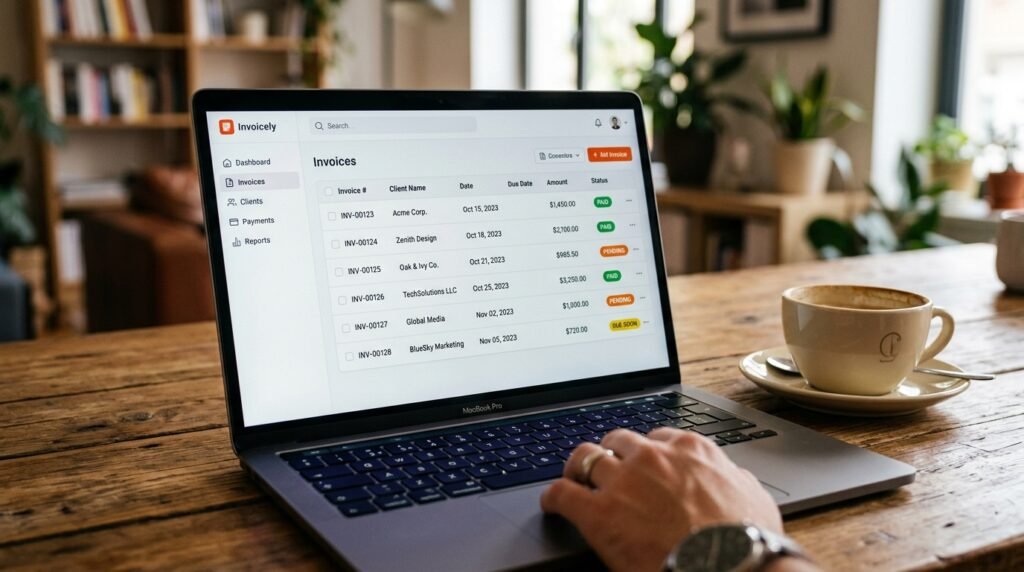
1. Wave
Wave is genuinely free for basic invoicing, which made it the first of the best invoicing apps for freelancers I tested given how little most solo freelancers actually need beyond core invoice creation and tracking. It covers professional-looking invoices, payment tracking, and even basic accounting features without a subscription cost.
The tradeoff is that Wave’s payment processing fees are on the higher side compared to some paid competitors, so if you’re invoicing frequently, those transaction fees can add up in a way that makes a paid tool’s lower processing rate actually cheaper over time.
2. FreshBooks
FreshBooks is built specifically with freelancers and small service businesses in mind, and it shows in the details — time tracking built directly into invoices, recurring billing that’s genuinely simple to set up, and client payment reminders that go out automatically instead of you remembering to chase someone down, which is exactly what separates the best invoicing apps for freelancers from generic accounting software.
Among the best invoicing apps for freelancers I tested, FreshBooks felt the most polished specifically for client-facing use, since the invoices themselves look genuinely professional without any real design effort on my part.
3. Invoice Ninja
Invoice Ninja offers a surprisingly capable free tier, including recurring invoices and basic client management, with a paid tier unlocking more advanced features like proposal creation and additional payment gateway options.
This became the one I’d recommend specifically for freelancers who want more customization control than Wave offers, without jumping straight to FreshBooks’ pricing. It’s a genuinely solid middle option among best invoicing apps for freelancers that doesn’t get mentioned as often as the bigger names.
4. QuickBooks Self-Employed
QuickBooks Self-Employed combines invoicing with tax categorization specifically built around freelance and self-employment income, which matters if separating business and personal expenses for tax purposes is a genuine pain point for you beyond just sending invoices through one of the best invoicing apps for freelancers.
The invoicing features themselves are solid but not the most advanced on this list — the real value here is the tax-side integration, so it’s worth considering specifically if that’s a bigger priority than invoice customization.
Step-by-Step: How to Actually Switch From a Manual System
Here’s the actual sequence that got me off my error-prone Word template and onto one of the best invoicing apps for freelancers.
Step 1: Export or Document Your Current Client List
Before switching tools, get a clean list of your active clients with their correct contact and billing details. This is the step where that wrong-year mistake actually gets caught and fixed, since you’re reviewing everything fresh instead of copying forward whatever was already there into one of the best invoicing apps for freelancers.
Step 2: Set Up One Recurring Invoice First
Rather than migrating everything at once, set up your most frequent recurring client invoice first in the new app. This lets you catch any formatting or payment-term issues on one invoice before rolling the whole system out.
Step 3: Send a Test Invoice to Yourself
Before sending anything to an actual client, send a test invoice to your own email to check exactly how it looks and reads from the client’s side. I caught a formatting issue this way that I never would have noticed just looking at the editing screen of one of the best invoicing apps for freelancers.
Step 4: Migrate Remaining Clients Gradually
Move clients over as their next invoice comes due, rather than switching every single client on the same day. This spreads out any hiccups and means you’re not learning a new tool’s quirks under the pressure of a dozen invoices at once.
Step 5: Set Up Payment Tracking Alerts
Once everything’s migrated, turn on whatever overdue-payment notifications the app offers. This is genuinely the feature that replaces the mental tracking a manual system forces you to do, and it’s the one most people forget to actually configure after switching to one of the best invoicing apps for freelancers.
Real Example: What I Actually Ended Up Using
This is genuinely how my own search for the best invoicing apps for freelancers played out, not a cleaned-up hypothetical.

After testing all four, I settled on FreshBooks for my own invoicing, specifically because the automatic payment reminders removed a task I used to do manually and often forgot about until a payment was genuinely overdue.
A freelance designer friend went with Wave instead, specifically because her invoice volume is low enough that the free tier covers everything she needs, and the slightly higher processing fees don’t add up to much at her actual volume — a perfectly reasonable choice among the best invoicing apps for freelancers depending on how often you actually bill.
Neither of us ended up choosing based on which tool had the most features. We each picked based on which specific pain point — payment reminders for me, cost for her — mattered most given our actual invoicing habits, which is really the best way to choose among the best invoicing apps for freelancers rather than chasing the longest feature list.
Common Mistakes People Make With This
These are mistakes I made myself while testing different invoicing tools, or watched other freelancers make with their own setups.
Mistake 1: Sticking with a manual template too long out of habit. The wrong-year invoice that started my own search is exactly the kind of mistake a dedicated tool prevents by auto-populating fields correctly every time.
Mistake 2: Not testing an invoice before sending it to a real client. Always send yourself a test invoice first. Catching a formatting issue privately is a lot less awkward than a client pointing it out.
Mistake 3: Ignoring payment tracking features after setup. Many of the best invoicing apps for freelancers include overdue reminders and payment tracking that go unused simply because nobody turned them on after the initial setup.
Mistake 4: Choosing based on features you won’t actually use. A tool with extensive accounting features is overkill if you just need clean, professional invoices sent on time. Match whichever of the best invoicing apps for freelancers you’re considering to your actual workflow, not a hypothetical future business.
Mistake 5: Migrating every client at once. Spreading the switch across a few weeks, moving clients over as their next invoice comes due, catches issues before they affect more than one relationship at a time — a small precaution worth taking regardless of which of the best invoicing apps for freelancers you settle on.
Comparing This to Manual Invoicing
Manual invoicing with a Word or Excel template genuinely works for very low volume — a single client, occasional work, nothing recurring. If that’s your actual situation, the overhead of learning one of the best invoicing apps for freelancers might not be worth it yet.
The tradeoff is exactly what happened to me: manual systems rely entirely on your own attention catching every detail, every time, and that attention genuinely degrades the busier you get. The best invoicing apps for freelancers exist specifically for the point where manual tracking stops being reliable. The IRS’s guidance on self-employed recordkeeping is worth a look if you’re also trying to make sure your invoicing supports proper tax documentation, not just client-facing polish.
How This Fits Into a Broader Freelance Setup
Invoicing doesn’t need to exist separately from the rest of how you track client relationships. The same connected thinking I’ve covered in my guide to using Notion as a CRM for freelancers works well alongside any of the best invoicing apps for freelancers, since client status and payment history can inform each other instead of living in two completely disconnected systems.
And if you’re also managing your software costs carefully, the same budget-conscious approach from my roundup of AI tools for freelance writers on a budget applies well here too — start with a free tier among the best invoicing apps for freelancers, and only upgrade once you’ve genuinely outgrown what it offers.
Final Thoughts
The best invoicing apps for freelancers aren’t about looking impressively professional for its own sake — they’re about removing the specific kind of mistake that manual systems are genuinely prone to, the way a wrong-year invoice quietly undermined a client’s confidence in me over something that had nothing to do with my actual work.
Start by documenting your current client list cleanly, set up one recurring invoice first, and always test before sending anything to a real client. Migrate gradually rather than switching everyone at once, and give whichever of the best invoicing apps for freelancers you pick a real chance to prove itself before judging it.
That’s really the whole shift — not fancier invoices, just a system that catches the small errors your own attention eventually will miss, so a client’s first thought when they see your invoice is about the work, not a typo in the date.